Security4 min read
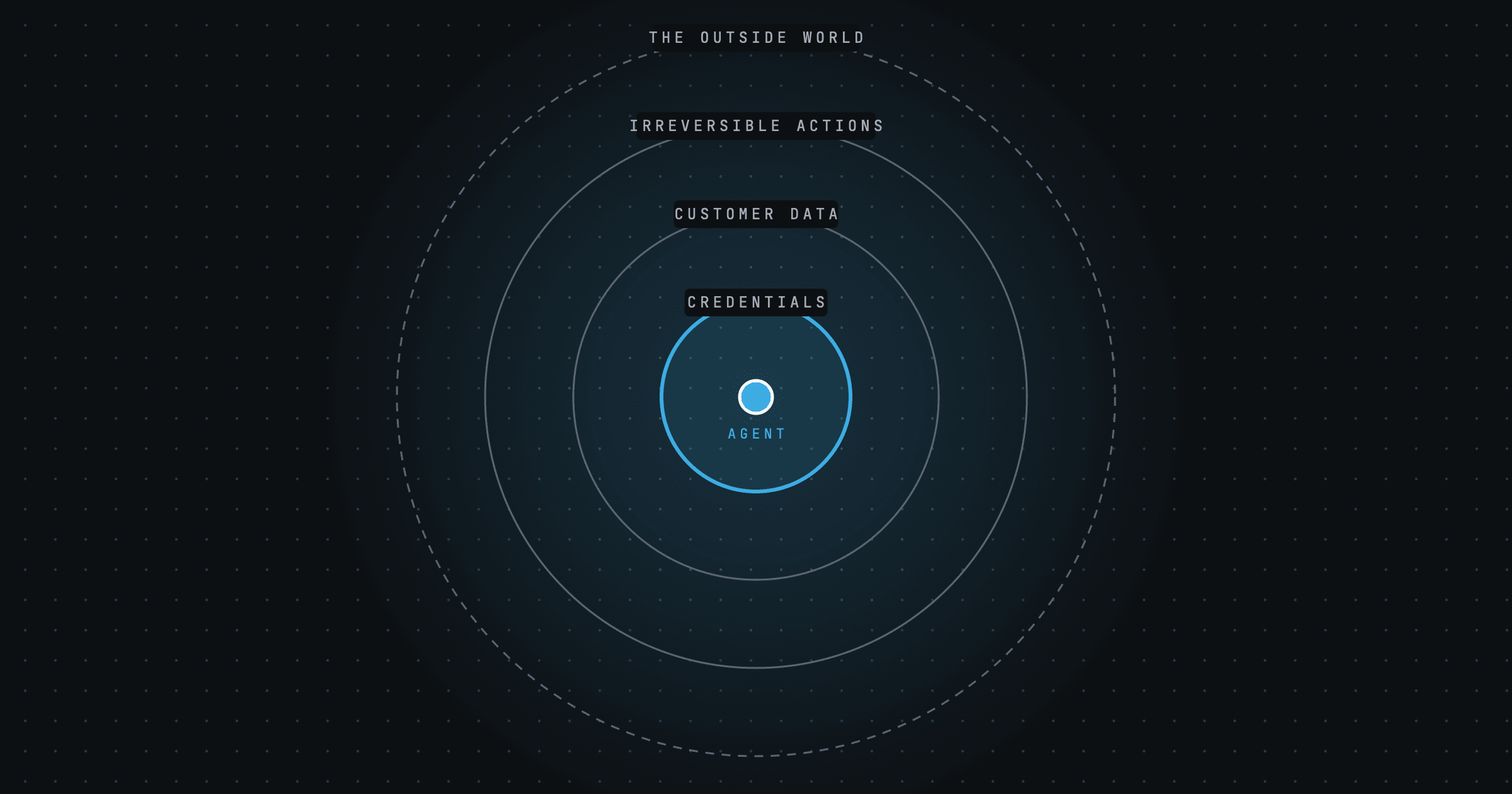
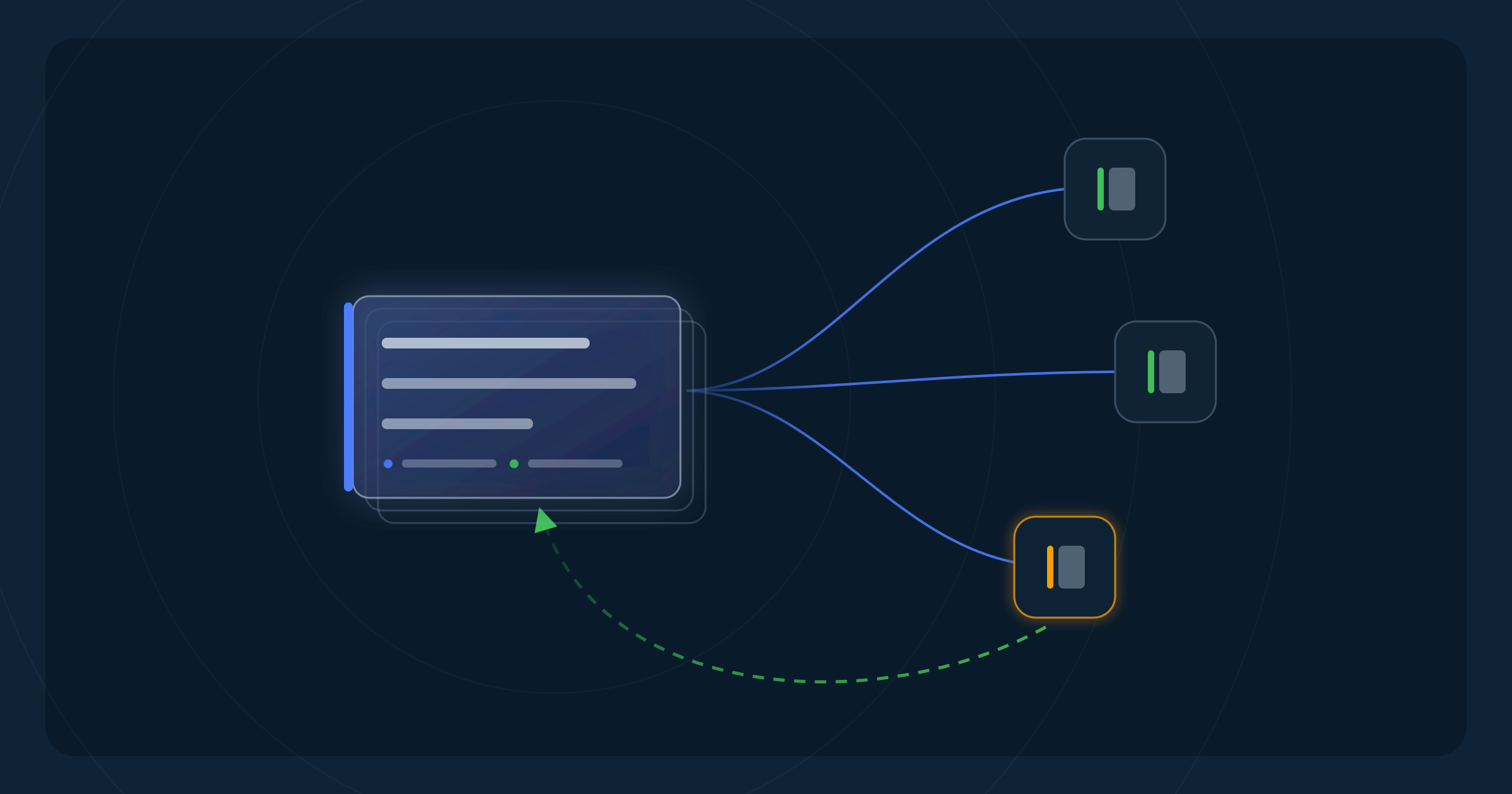
Of all the questions to ask before handing an AI agent access to your systems, one does most of the work: if this goes wrong, what is the worst that can happen? Four versions of that question, and how to act on the answers.
Security7 min read
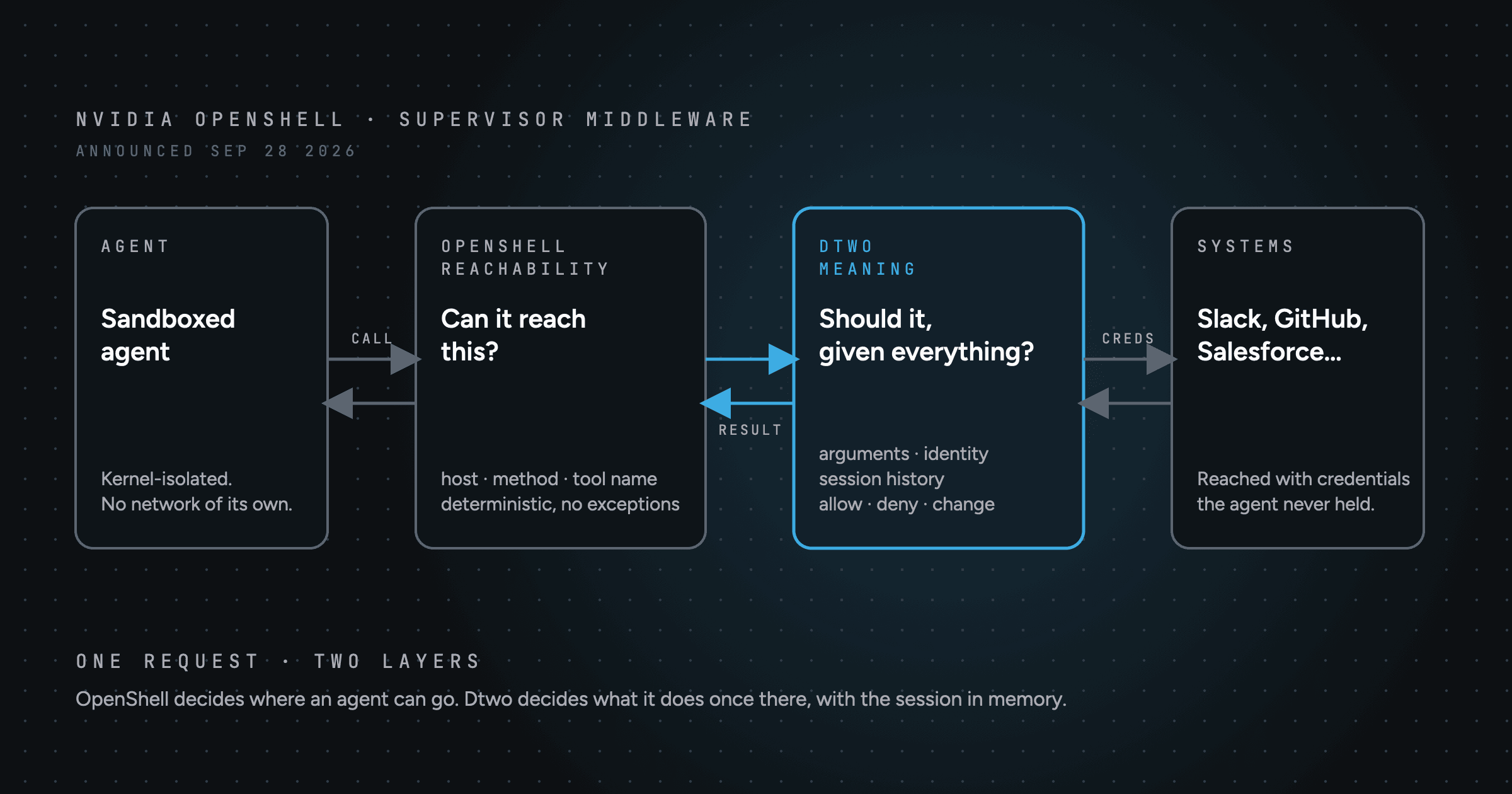
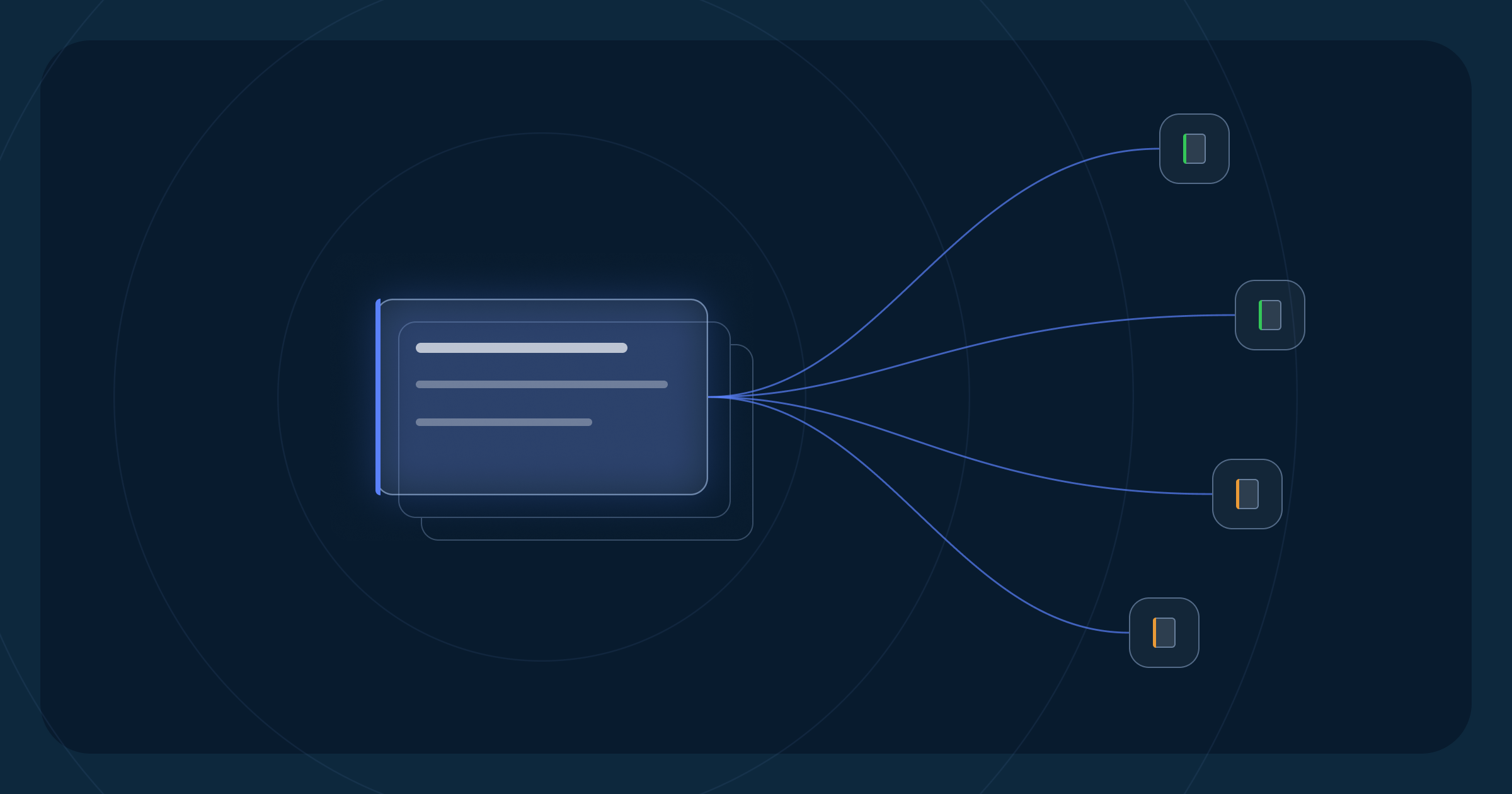
NVIDIA's OpenShell, announced September 28, decides what an agent can reach. Dtwo sits in its middleware hook and judges each call by its arguments and by what the session already did elsewhere. If you run agents in OpenShell, you still need that layer.
Security6 min read
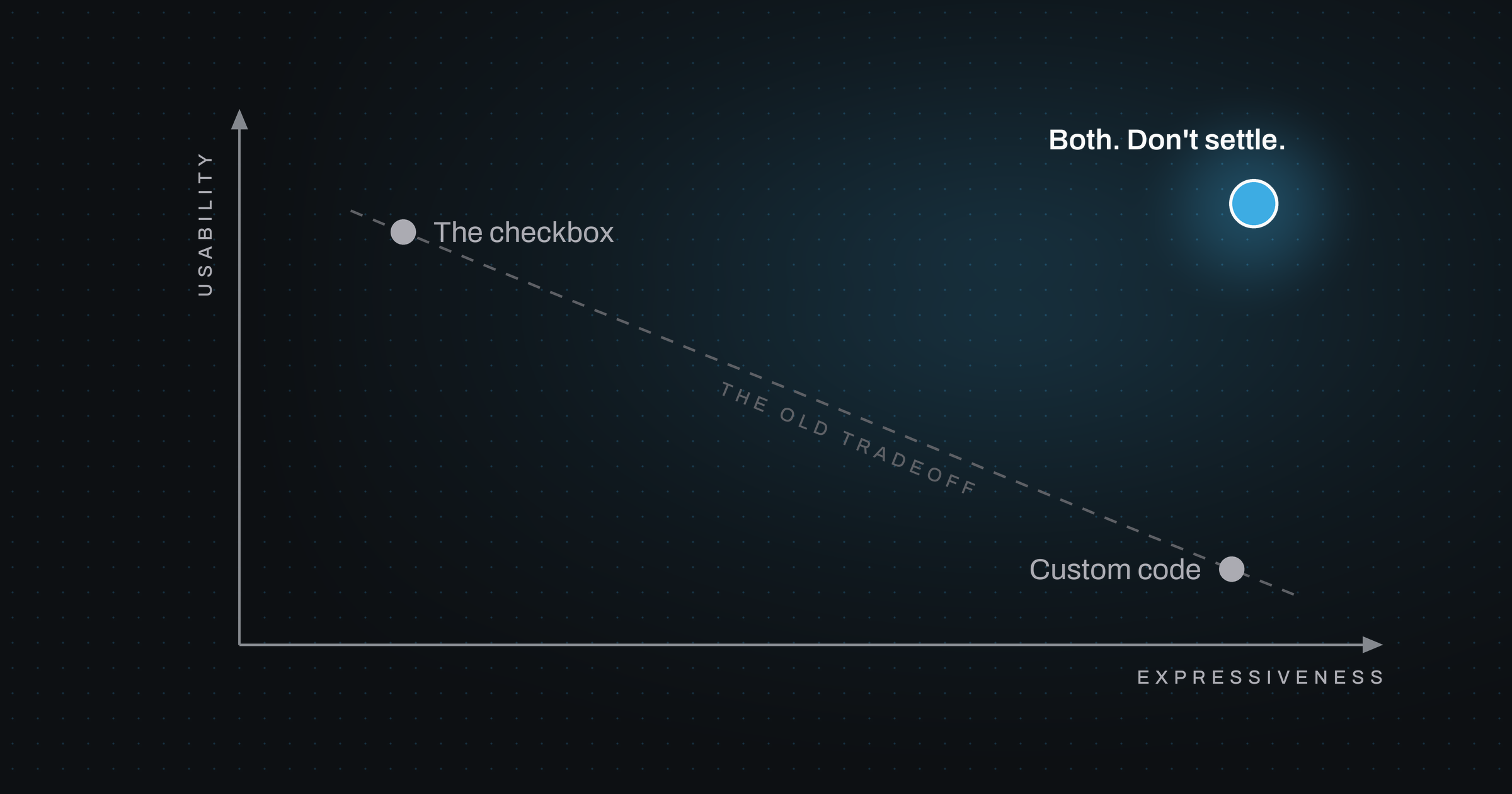
Expressiveness and usability. Everything else on the vendor's feature list is one of those two in disguise.
Security5 min read
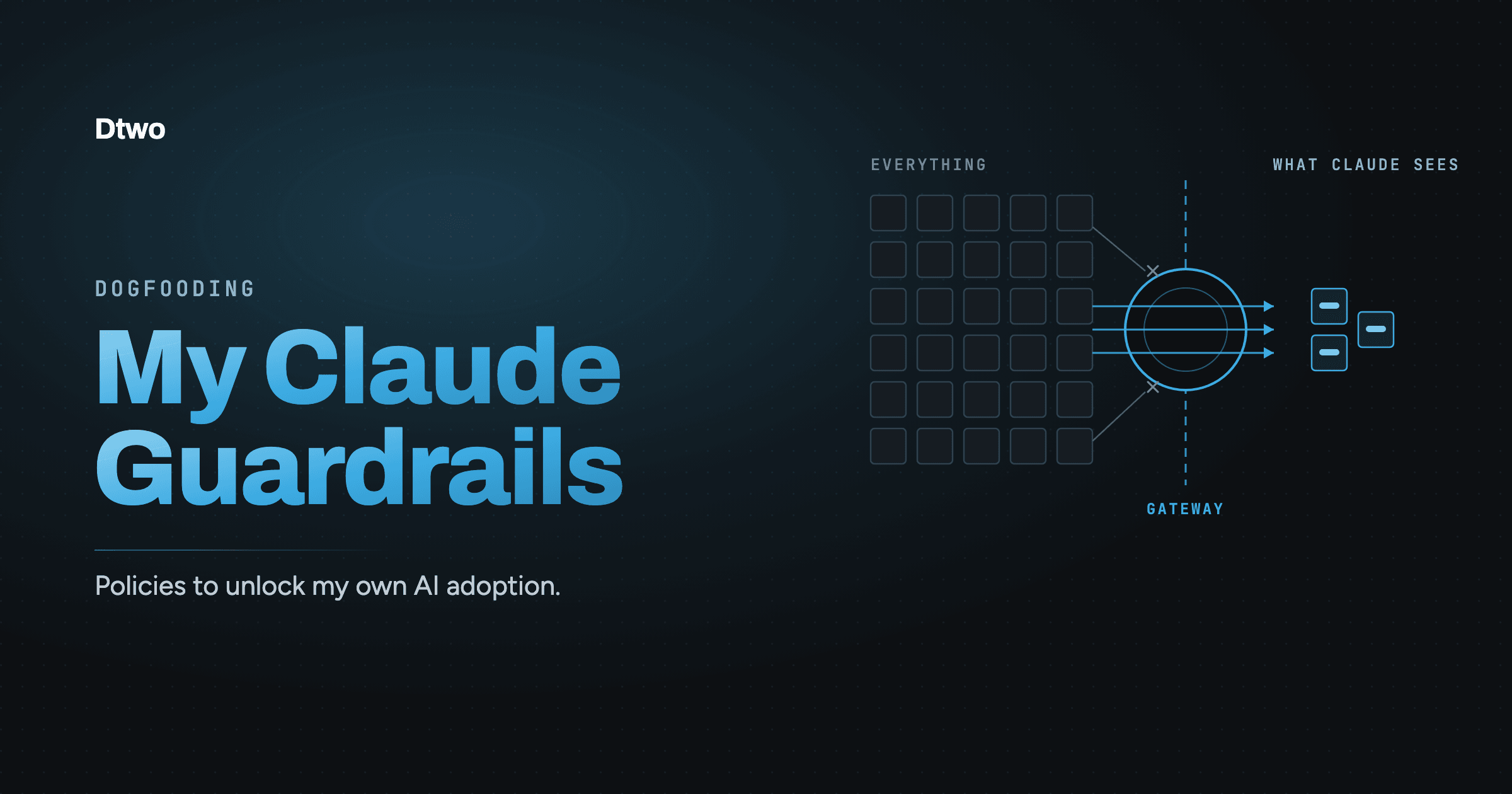
Claude Code can access our internal systems. Here are the guardrails: the policies that decide what my AI agent can actually reach, all published in our policy catalog.
Engineering9 min read
Cheap implementation moved the work upstream. Every architectural decision is now recorded in the same repo as code. It becomes the context for everything built after it, and gets revised when we turn out to be wrong.
Security3 min read
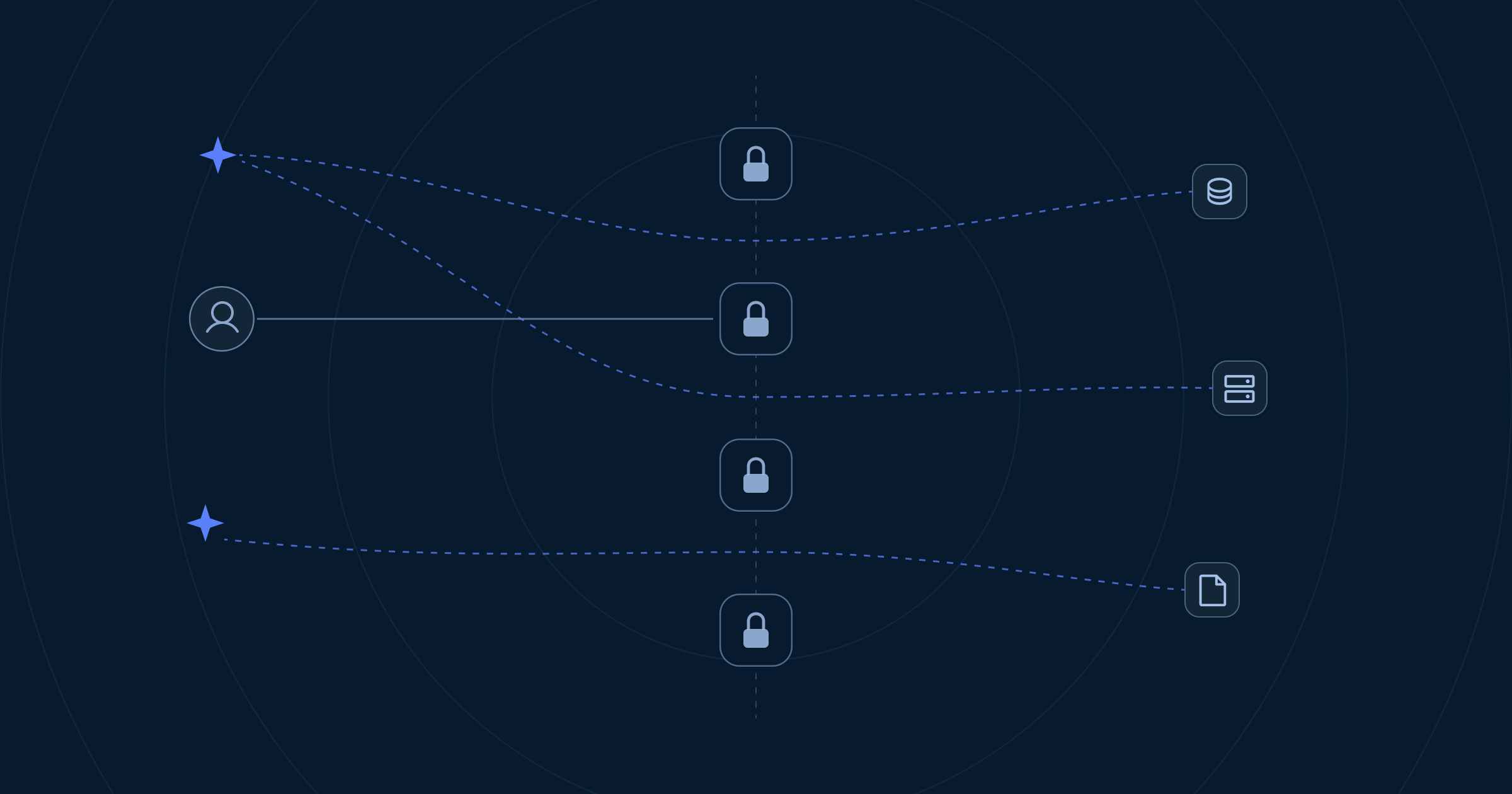
The risk from AI agents isn't any one system — it's the path between them. Policy guards that path. It's hard to write — so we open-sourced a library of policies.
Security7 min read
Audit worked because people feared getting caught. AI agents don't — so agent security must shift from audit to authorization across every system.
security2 min read
Legacy security controls were built for humans, not AI agents — that's why agentic AI security and governance are breaking. Here's the gap, and how to close it.